How it works
Grid tie solar panel arrays are mounted in a sunny location facing south, southeast, or southwest. These solar electric, or photovoltaic (PV), solar panels create DC power when the sun shines on them. This DC power is then turned into usable AC power by an inverter, which can be mounted outdoors or indoors or even on the solar panels themselves.
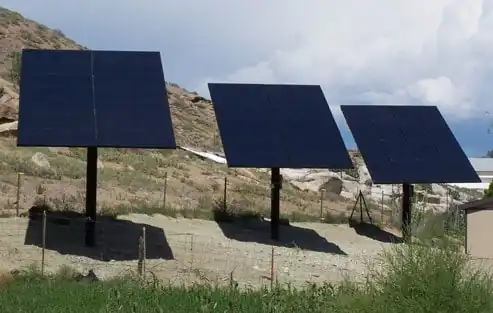
The location can be as versatile as each project requires, from a flush roof mounted system on a building to a top of pole mounted array located in a field near the building but, due to size constraints on available space, the roof is usually the best choice.
From sunlight to your meter
Solar panels
Photovoltaic solar panels create DC power when the sun shines on them.
The inverter
DC power is turned into usable AC (alternating current) power and back-fed into a breaker box.
Your home first
Solar power is always used by home demands first, then any extra is fed back into the grid – essentially spinning your meter backwards.
The grid as a battery
A standard grid tie is designed without batteries, which tend to demand a higher maintenance factor, instead using the utility grid as, essentially, a better more efficient battery.
An integrated system
The majority of residential solar grid ties are designed as ‘net zero’ electricity usage homes as a forefront goal for the system. This means that, during the day, the home’s meter spins backward, accruing a credit with the utility company. At night, when the sun has set, that credit is used up again by the loads in the home. Expanding on this premise, the residence also creates an overall credit with the utility company during long, sunny summer months. This credit is then used again during the winter. At the end of the year, if a solar system has created more power than the home used during that time, the utility company pays for the extra power, usually at a wholesale (rather than a retail) rate.